
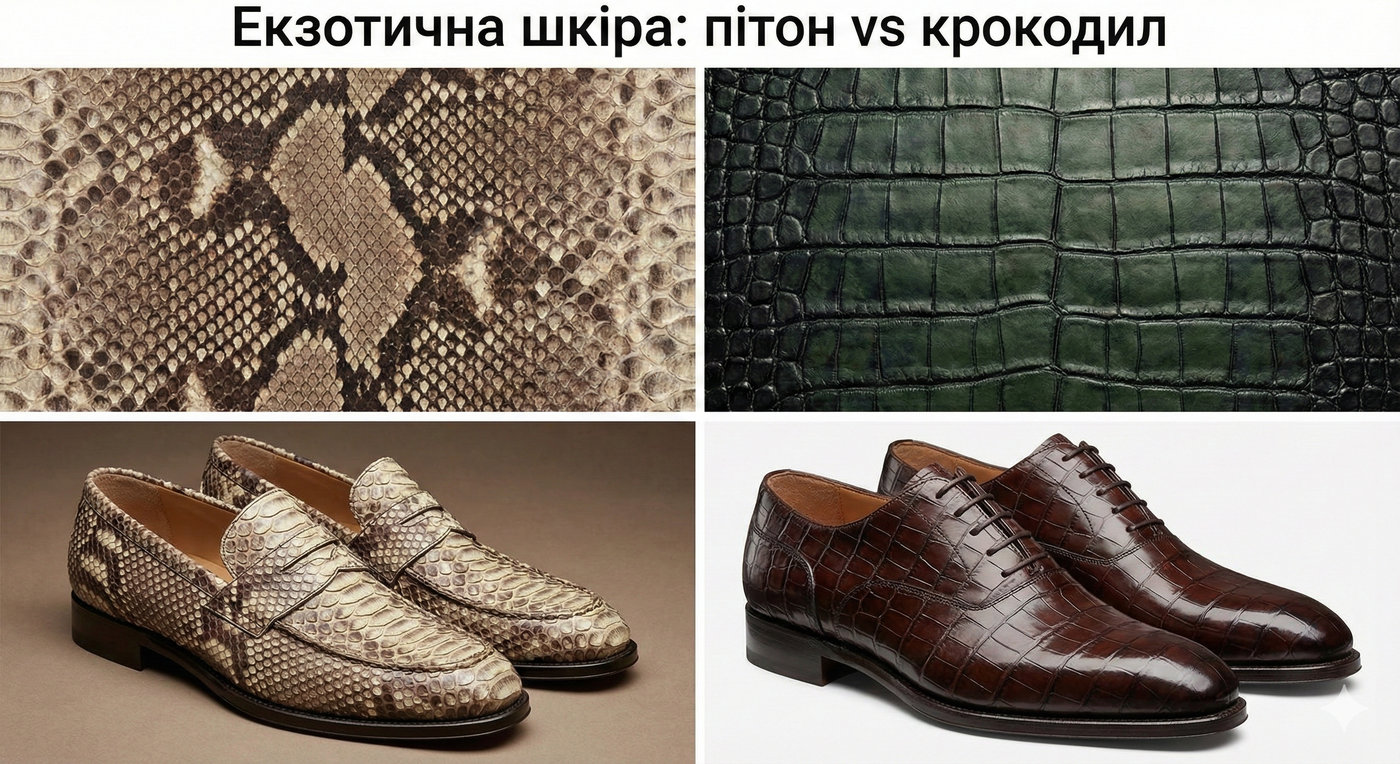
Exotic leather turns shoes into a work of art and an investment. Shoes or boots made of python or crocodile are not just a status accessory, but a unique pattern of nature that is never repeated. At Vicelli, we work with the highest quality exotic leather and know everything about its features. We tell you what the difference is between python and crocodile, and how to choose the one that suits you best.
Python skin: natural geometry and flexibility
Python skin impresses with the perfect symmetry of the scales, which form a unique geometric pattern. Each skin is unique: the size, shape and arrangement of the scales depend on the type of snake, its age and habitat. The large central scales from the abdomen are the most valued – they create a spectacular pattern on shoes.
Types of python skin:
Reticulated Python is the largest species of snake, with skin with a bright contrasting pattern of large irregular diamonds. This is the strongest and most expensive type of python skin.
Burmese Python – has a softer, more blurred pattern with less contrasting transitions. The scales are smaller, the texture is more delicate. Suitable for elegant shoes.
Tiger Python – characterized by longitudinal stripes and spots resembling the color of a tiger. The rarest and most expensive species.
Characteristics of python skin:
Flexibility – python leather is elastic, easily takes the shape of the insole, and does not restrict movement. This makes it ideal for shoes of any style.
Softness – even with visible scales, the leather is pleasant to the touch, not rough. After wearing, it becomes even softer and more comfortable.
The weight is lighter than crocodile leather, and python shoes do not weigh down the foot even when worn all day.
Durability – with proper care, it lasts 10-15 years, preserving the relief of the scales and the saturation of the color.
Crocodile skin: luxury and unparalleled durability
Crocodile skin is synonymous with luxury in the fashion world. It is valued for its exceptional strength, status and unique texture, which cannot be reproduced artificially. The pattern depends on the part of the skin: the belly gives regular square scales, the sides – more rounded, the back – bone plates with relief.
Types of crocodile skin:
Nile Crocodile is a classic choice for footwear. Medium scale size, clear relief, high strength. The most common and relatively affordable of all crocodile skins.
Saltwater Crocodile — the largest species, skin with large square scales on the belly. The most expensive variety due to limited quantity and difficulty in processing.
Alligator (American Alligator) – Technically not a crocodile, but often lumped together. Has a more uniform texture with no obvious pores. Popular in the US, less common in Europe.
Caiman is a more affordable alternative to crocodile. The skin is tougher, with a coarser texture and pronounced bony plates on the back. Suitable for shoes with an aggressive design.
Characteristics of crocodile leather:
Durability — the strongest among all types of leather, including calfskin. Resistant to mechanical damage, scratches, and punctures.
Structurality – has a dense, almost rigid structure. The shoe holds its shape well without additional frames.
The weight is heavier than python, but the difference is not critical with high-quality tailoring.
Durability – with proper care, it lasts 20-30 years. The leather practically does not wear out, and over time it acquires a noble patina.
Aesthetic differences: what suits which style
Python is elegance and dynamics. The pattern attracts attention, but does not look too aggressive. Perfectly combined with:
- Business style: loafers, oxfords, python monks add creativity to a classic look
- Smart casual: python boots become the accent of the look
- Evening wear: python shoes complement a suit or cocktail dress
The color range of python leather is diverse: from natural beige and brown to bright blue, red, green. The leather accepts paint well, which allows you to create unique color solutions.
Crocodile is status and conservatism. Crocodile skin looks more official, solid. It is best revealed in:
- Classic business shoes: oxfords, crocodile derby shoes – the choice of top managers and politicians
- Evening shoes: patent or matte, they perfectly complement a tuxedo or tailcoat
- Winter boots: crocodile leather is resistant to moisture and cold
Traditional colors are black, dark brown, and burgundy. Although there are bright options, the classic range best emphasizes the status of the material.
Care: capriciousness vs unpretentiousness
Python:
More delicate in care. Scales can peel off if over-dried or wet. Regular nourishment with special creams for exotic skin is mandatory – at least once every two weeks.
Protection from moisture is critical. Treat your shoes with a water-repellent spray before each time you go out in wet weather. If your python skin gets wet, dry it carefully, taking care not to deform the scales.
Storage requires humidity control. Too dry an atmosphere leads to peeling, too humid to mold. Use pads and cloth bags, and ventilate regularly.
Crocodile:
More unpretentious. The dense structure of the leather makes it resistant to external influences. It is enough to clean and apply cream once a month with regular wear.
It tolerates moisture better. Although crocodile skin cannot be wetted specifically, it is not as sensitive to rain or snow. After getting wet, it is enough to dry naturally and apply a nourishing cream.
Storage is easier. Crocodile skin is less prone to deformation, cracking or peeling. Standard storage conditions (18-22°C, 50-60% humidity) are quite suitable.
Durability and service life
In direct comparison, crocodile leather is stronger. It can withstand greater mechanical loads, is more resistant to abrasion and punctures. Crocodile shoes can last 20-30 years with active wear.
Python leather is less resistant to heavy wear. The scales can wear out in places of greatest friction (toe, heel). A realistic lifespan with regular wear is 10-15 years. However, for shoes that you wear occasionally (2-3 times a month), python is quite durable.
Important: the service life depends not only on the material, but also on the quality of sewing. At Vicelli, we use classic hand-sewing techniques, which further increases the strength and durability of shoes made of exotic leather.
Price: investment and its justification
Exotic leather is 5-15 times more expensive than calfskin, depending on the type, origin, and processing.
Python: the cost of finished shoes starts from $800-1200. The price is affected by the type of snake, the size of the scales, and the color (natural shades are cheaper than bright colors). Shoes made from solid pieces of skin with large central scales are more expensive.
Crocodile: starting price from $1500-2500. The most expensive are models made of saltwater crocodile with a perfectly symmetrical pattern on the belly. Caiman skin is more affordable – from $1000.
Why is there such a difference?
Limited quantity: exotic animals are not mass-bred, each skin is unique.
Complexity of processing: tanning, dyeing and preparing exotic leather requires special knowledge and technology.
Handmade: Shoes made of python or crocodile cannot be sewn on an assembly line. Each pair is handmade by a master.
Regulation: Trade in exotic skins is regulated by the international convention CITES, which includes paying duties and obtaining permits.
Ethical aspects and legality
Vicelli works exclusively with legal exotic leather from certified suppliers. All materials have CITES documents, which confirm the origin of animals from licensed farms, and not wild populations.
Modern farms adhere to ethical standards. This does not contribute to the decline of wild populations – on the contrary, the economic value reduces poaching. Part of the profits go to habitat conservation programs.
When ordering shoes made from exotic leather, request certificates of origin. Legal leather costs more, but guarantees quality and no problems at customs.
How to choose: practical recommendations from Vicelli
Choose Python if:
- Looking for lighter and more flexible shoes for everyday wear?
- You want a bright, eye-catching pattern and a wide color palette
- Budget is limited, but you want something exotic
- Do you plan to wear shoes in the warm season?
Choose a crocodile if:
- You need the most durable and strong shoes possible
- Important status and classic luxury
- Looking for shoes for formal events or business meetings?
- Ready to invest in long-term value
A compromise solution: at Vicelli, we offer combination shoes — a base made of calfskin with exotic elements (toe, heel, decorative inserts). This allows you to get a unique design without the full cost of exotic shoes.
Create unique shoes from exotic leather at Vicelli
Vicelli craftsmen work with the finest exotic leather from trusted suppliers in Italy, France and Singapore. We will help you choose the optimal type of leather, pattern and color to suit your wishes and lifestyle.
Each pair of shoes made of python or crocodile at Vicelli is an individual project. We take into account the characteristics of the skin, the location of the pattern, and create a perfect fit according to your measurements. The result is a unique shoe that cannot be repeated.
Book a consultation – we will show you leather samples, discuss your ideas, and create shoes that will be your pride and investment for decades.